

Animals in Nairobi National Park are one of the main attractions for visitors exploring Kenya’s wildlife close to the capital city. Nairobi National Park is a national park in Kenya located in south-central Kenya. It was established in 1946, about 7 km (4.3 mi) south of Nairobi.
Nairobi National Park covers an area of 117 km² (45 sq. mi). The park is fenced on three sides, while the open southern boundary allows migrating wildlife to move between the park and the adjacent Kitengela plains. During the dry season, herbivores gather in the park.
Nairobi National Park is negatively affected by increasing human and livestock populations, changing land use, and wildlife poaching. Despite its proximity to the city and its relatively small size, the park supports a large and varied wildlife population. It is also one of Kenya’s most successful rhinoceros sanctuaries.
Animals Found in Nairobi National Park
Almost everyone travelling to Africa hopes to see predator species, and the animals in Nairobi National Park do not disappoint. The park is home to a large and diverse wildlife population, including predators such as lions, leopards, cheetahs, and hyenas.
Species found in the park include the lion, leopard, cheetah, and hyena, among many others. Other large mammal species found in Nairobi National Park include buffalo, black rhino, baboon, eland, gazelle, hartebeest, hippopotamus, impala, giraffe, wildebeest, and waterbuck.
One of the major species missing from Nairobi National Park, and one that many people hope to see on an African safari, is the elephant. Nairobi National Park also has 40 different amphibians and reptiles.
Common Animals in Nairobi National Park
The most populous species are found among the ungulates. These include:
- Impala
- Wildebeest
- Hartebeest
- Thomson’s gazelle
- Grant’s gazelle
- Olive baboon
- Black-backed jackal
- Common ostrich
- Nile crocodile
- Eland
It is fair to expect to see many of these species during your safari in Kenya. The abundance of ungulates also supports the predator species, making their hunting opportunities easier.
Predators in Nairobi National Park
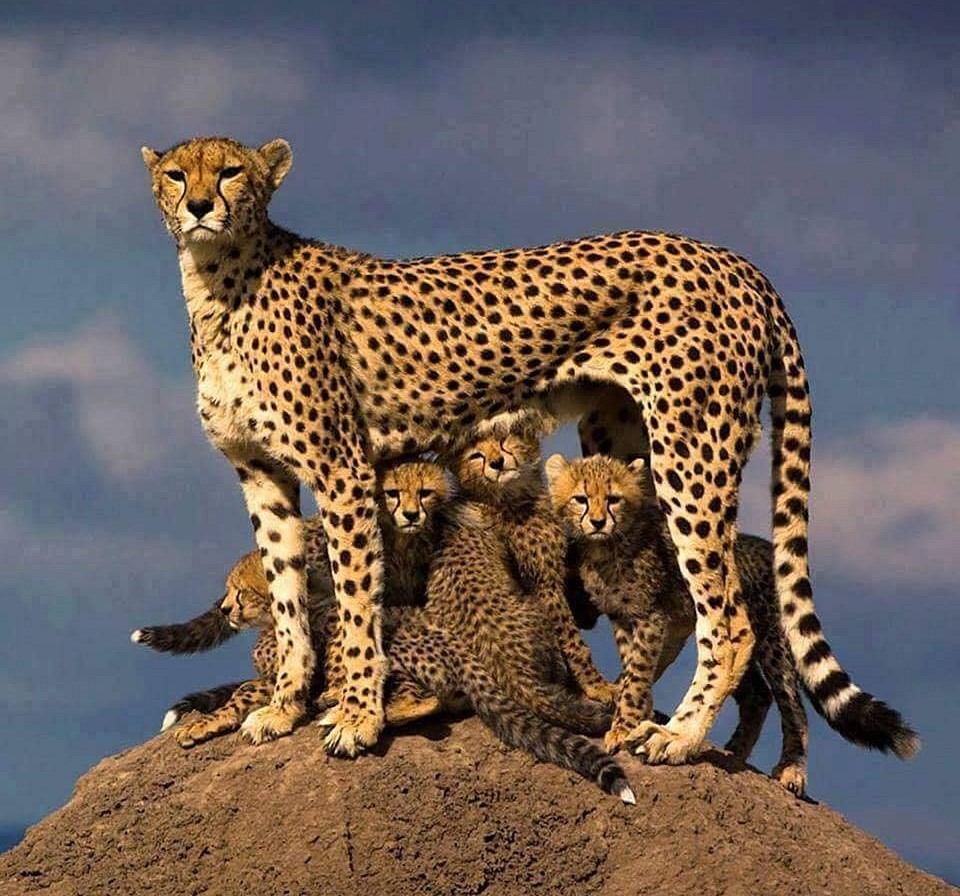 Nairobi National Park is particularly rewarding for visitors interested in predators. Lions, leopards, cheetahs, and hyenas are among the important predator species found in the park.
The large numbers of herbivores and other prey species provide an important food source for predators. This combination of open grass plains, bushes, forests, riverine areas, and valleys creates different habitats where the wildlife of Nairobi National Park can live.
Birds
Nairobi National Park has an abundance of bird species, with over 450 bird species recorded in the park. The vulture and ostrich are two of the larger or more intriguing species, with the ostrich commonly seen along the plains.
Other large bird species include the Crowned Crane, Kori Bustard, Ground Hornbill, Egyptian Goose, and Black-necked Heron. There are also several songbirds that provide a complementary experience for bird watchers visiting Nairobi National Park.
Rhinos
Nairobi National Park has a good variety of wildlife. Apart from elephants, most of the big safari animals are present, and there is a very good chance of seeing rhinos.
White rhinos are easiest to spot as they graze on the open plains, while the park is one of Kenya’s most successful sanctuaries for the black rhino, which tends to keep hidden in the thickets.
Nairobi National Park is committed to protecting the endangered rhino, and its efforts are among the most successful in Africa. Experiencing these magnificent creatures is certainly a highlight for visitors. Many people also find the proximity of this collection of wildlife to the industrial city of Nairobi to be a fascinating highlight of their safari.
Walking and Seeing Animals in Nairobi National Park
 The Nairobi National Park walk is a great way to breathe fresh air and take in the wilderness that is literally a neighbour to one of the most industrial cities in Africa.
Apart from that, the abundance of wildlife that is so easily accessible close to such a large metropolis leaves most people bewildered that this wildlife and wilderness is right there.
The Nairobi Safari Walk is a chance to get out and walk in the national park. However, it is not a trail where self-guided walking is permitted. You must have a park ranger or guide to take you around while explaining the various animal species in Nairobi National Park.
Wildlife Habitats
Nairobi National Park is mainly an open grass plain dotted with acacia bushes, where many animals in Nairobi National Park inhabit and benefit from the available habitat.
There are also areas of highland dry forest in the west, riverine forest in the south, and some deep rock valleys and gorges. Several endemic plant species are found on the rocky hillsides, while the park has 500 tree species.
These different habitats provide suitable environments for the diverse wildlife found throughout Nairobi National Park, from grazing herbivores on the open plains to predators and other animals living around the forests, bushes, valleys, and riverine areas.
Best Time for Wildlife Viewing
The best time to visit Nairobi National Park is during the dry season, from June to September. This is when animals gather around the remaining water sources, although Nairobi National Park can be visited throughout the year.
The long rains, from March to May, and the short rains, from October to November, usually make animal spotting more difficult. Rain can interfere with game drives, while the vegetation tends to become very high, making some animals harder to see.
Nairobi National Park and the Big Five
Nairobi National Park is also sometimes called the Kifaru Ark, which means the “Rhinoceros Sanctuary.” It is one of Kenya’s most successful rhinoceros sanctuaries and is one of only a few parks where visitors can be certain of seeing the black rhinoceros in its habitat.
The park is also a place where tourists can spot the Big Five, although the elephant is missing. Nairobi National Park has four members of the Big 5 animal species, which can provide tourists with memorable and amazing moments during their safari in Nairobi National Park.
The combination of rhinos, lions, leopards, buffaloes, cheetahs, giraffes, wildebeest, gazelles, zebras, hyenas, birds, reptiles, and many other species makes Nairobi National Park an important wildlife destination. Its unique location also allows visitors to experience African wildlife remarkably close to Nairobi city.