
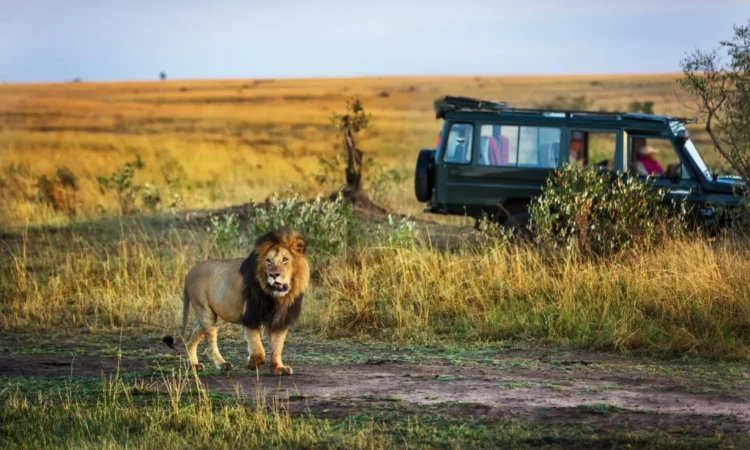
Facts About Masai Mara
Facts About Masai Mara ; found in Narok County in Kenya, Masai Mara National Reserve, also known as the Mara, is the most popular safari destination in Kenya and is the most famous reserve in the world, renowned for its high concentrations of wildlife, including the Big Five—lion, leopard, cape buffalo, rhinos and elephants and the annual Great Wildebeest Migration.
The reserve lies along the Great Rift Valley, covering about 1,510 square kilometers. Masai Mara is an extension of the Greater Serengeti–Mara Ecosystem, which is the oldest ecosystem in the world and the other part is Tanzania’s Serengeti National Park, which Masai Mara shares a border with in the southern region.
Masai Mara National Reserve also shares borders with Masai Pastoral communities to the north/east and the Oloololo/Siria Escarpment to the west.
The Mara was named in honor of the Maasai people, a tribe that has lived in the area for centuries and in the local Maa language spoken by the Maasai people, the word “Mara” means “spotted,” referring to the short trees and bushes that dot the endless landscape.
As part of the Serengeti–Mara Ecosystem, Masai Mara National Reserve plays host for the Great Wildebeest Migration and the nerve-wracking Mara River Crossing. The Mara Triangle is where most of the migrating herds enter the Masai Mara National Reserve.
The main reserve is surrounded by a number of private conservancies referred to as Mara Conservancies; these include Kerinkani, Kimintet, Koiyaki, Lemek, Maji Moto, Mara North, Naikara, Ol Chorro Oirowua, Ol Derkesi, Olkinyei, Oloirien and Siana.
History of Masai Mara National Reserve
Masai Mara National Reserve was first established as a wildlife sanctuary in 1961 covering only 520 kilometers and included The Mara Triangle. In the same year, the sanctuary was extended to the East and turned into a game reserve covering an area of 1,821 square kilometers.
In 1974, the game reserve was upgraded to a National Reserve, however 159 square kilometers were returned back to the local Maasai Community, reducing the area of the reserve to 1,510 square kilometers.
The Maasai People
The nomadic Maasai people are one of the most famous tribal groups in Africa, one of the few tribes on the continent that have retained their traditions, norms and culture amidst technology and modernity.
They live in the south, central and northern parts of Kenya as well as Northern parts of Tanzania (Serengeti and Ngorongoro).
The Maasai are known for their tall stature, traditional shukas and costumes, and eye-catching beds. Just like Karamojong in Uganda, the Maasai people depend on their livestock for everything. In fact, the Maasai people believe that all the cattle in the world belong to them and that what is not in their possession was at one time stolen from them. In this past, the belief of global ownership of cattle caused many tribal wars as they attempted to repossess cattle from their neighbors.
Wildlife in Masai Mara National Reserve
Masai Mara National Reserve is one of the most visited safari destinations in Africa thanks to its abundant wildlife, the reserve is famous for hosting the Big Five – Lions, Leopards, Cape Buffaloes, Rhinos, and Elephants.
Masai Mara National Reserve is the only reserve/national park in Kenya with an indigenous black rhino population. Once upon a time, rhinos roamed freely in the reserve but from the 1970s to early 1980s, poachers killed most of them, with only 15 individuals remaining. Due to tremendous conservation efforts, the number has grown and Masai Mara is still the best place to see rhinos in Africa.
In addition to the Big Five, the reserve is also home to grazers like duikers, impalas, hartebeests, giraffes, roan antelopes, zebras, topi, wildebeests and Thomson’s gazelles. The reserve is also home to crocodiles, hippos, jackals, cheetahs, hyenas, servals and over 470 species of birds, including vultures, secretary birds, ostriches, marabou storks, long-crested eagles, lilac-breasted rollers, hornbills, crowned cranes and African pygmy-falcons.
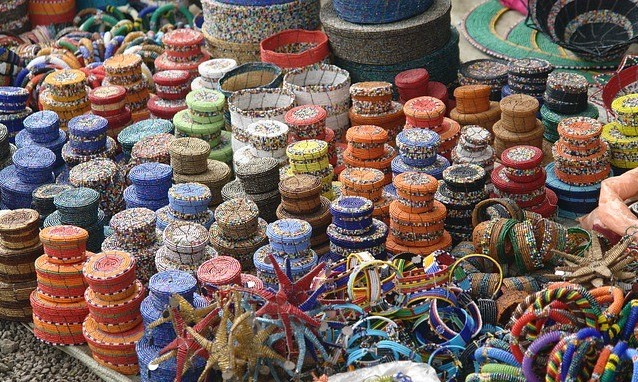
Masai Mara Entry Fees
Entry fees to Masai Mara depend on the season and status of the visitors.
For Non – Residents the entry fees are USD 100 per person per day from January to June (low season) and USD 200 per person per day from July to December (High Season). For children aged 9 to 17, the fees are USD 50 throughout the year and those under 8 years old enter for free.
How To Get to Masai Mara National Reserve
Masai Mara National Reserve can be accessed by air or road. Most travelers visit Masai Mara on an all-inclusive tour package organized by a local tour operator, which often includes transport either by road or air.
By Air
Domestic and charter flights are available from Nairobi’s Wilson Airstrip to one of the many airstrips serving Masai Mara National Reserve. The flight is approximately 1 hour.
By Road
Most Masai Mara Safaris starts from Nairobi, the capital of Kenya and from here, it is a journey of approximately 4-5 hours. While on an all-inclusive Masai Mara Safari, a private safari vehicle with a full-time driver is assigned to you by the company.